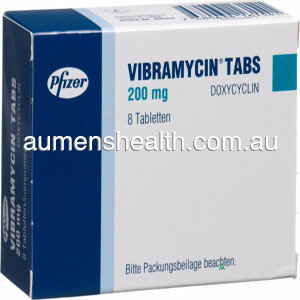
What is VIBRAMYCINE N used for?
They arise both from the antibacterial activity and from the pharmacokinetic properties of doxycycline.
· Indications that take into account both the situation of this antibiotic in the range of antibacterial products currently available and updated knowledge on the resistance of bacterial species.
They are limited to the following infections:
or brucellosis,
or pasteurellosis,
o Lung, genitourinary, and ophthalmic chlamydia infections.
or lung, genitourinary infections with mycoplasmas,
or rickettsiosis,
or Coxiella burnetii (Q fever),
or gonococcal disease,
o ENT and bronchopulmonary infections with Haemophilus influenzae, in particular acute exacerbations of chronic bronchitis,
or treponemes, (in syphilis, tetracyclines are only indicated in case of allergy to beta-lactams),
or spirochetes (Lyme disease, leptospirosis),
or anger,
o moderate and severe inflammatory acne and inflammatory component of mixed acne.
Rosacea in its cutaneous or ocular manifestations.
Special situations
Prophylactic treatment after exposure and curative treatment of anthrax.
Official recommendations on the proper use of antibacterials should be taken into account.
Conditions for which this medicine may be prescribed
- Brucellosis
- Pasteurellosis
- Lung Chlamydia Infection
- Genitourinary chlamydial infection
- Chlamydia ophthalmic infection
- Pulmonary mycoplasma infection
- Genitourinary Mycoplasma Infection
- Rickettsiosis
- Q fever
- Gonococcal disease
- Haemophilus influenzae ENT infection
- Haemophilus influenzae bronchopulmonary infection
- Treponemal infection
- Spirochete infection
- Anger
- The acne
- Rosacea, cutaneous or ocular
- Anthrax
Method of administration and dosage of the drug VIBRAMYCIN N
Dose
Adults
· Subjects weighing more than 60 kg.
200 mg per day in one shot
· Subjects weighing less than 60 kg.
200 mg the first day
100 mg the following days in one dose
Specific cases:
· Acute gonococcal disease
or adult men
§ 300 mg the first day (in 2 divided doses) followed by 200 mg per day for 2 to 4 days
§ or one minute treatment of 500 mg or 2 doses of 300 mg administered 1 hour apart
or adult women
§ 200 mg per day
· Primary and secondary syphilis.
300 mg per day in 3 doses for at least 10 days.
Uncomplicated urethritis, endocervicitis, proctitis due to Chlamydiae trachomatis 200 mg per day for at least 10 days.
The acne
100 mg daily for at least 3 months. In some cases, half-dose therapy can be used.
Rosacea in its cutaneous or ocular manifestations.
100 mg daily for 3 months. There are no clinical data available after three months of treatment.
Special situations
Anthrax: post-exposure prophylaxis and curative treatment of symptomatic persons who can receive oral treatment, either immediately or in combination with parenteral treatment: 200 mg / day in two divided doses.
The duration of treatment is 8 weeks when exposure to anthrax is tested.
Children over 8 years old.
4 mg / kg / day.
Special situations
Anthrax: post-exposure prophylaxis and curative treatment of symptomatic persons who can receive oral treatment, either immediately or in combination with parenteral treatment: 4 mg / kg / day in two divided doses without exceeding the adult dose (200 mg / day).
The duration of treatment is 8 weeks when carbon exposure is tested.
Administration form
Administer in the middle of a meal with a glass of water (100 ml) and at least one hour before going to bed.
Take the tablets:
· It is swallowed as it is with a sufficient amount of water;
· Whether diluted in half a glass of water. In this case, and to swallow all this medicine, it is recommended to shake well after dispersing the tablets in water. The yellow color is normal, it is that of the active ingredient.
Possible side effects of VIBRAMYCINE N
- Photosensitization reaction
- Acne
- Erythroderma
- Allergic reaction
- Allergic urticaria
- Skin itching
- Angioedema
- Anaphylactic reaction
- Rheumatoid purple
- Pericarditis
- Exacerbation of lupus erythematosus
- Intracranial hypertension
- Dental dyschromia
- Enamel hypoplasia
- Digestive disorder
- Sickness
- Epigastralgia
- Diarrhea
- Anorexy
- Gloss
- Enterocolitis
- Anogenital candidiasis
- Dysphagia
- Esophagitis
- Esophageal ulceration
- Hemolytic anemia
- Thrombocytopenia
- Neutropenia
- Eosinophilia
Show more Skin and subcutaneous tissue disorders.
Photosensitization reactions, skin rash, very rare cases of erythroderma, photoonicolysis.
Kidney and urinary tract disorders.
Extrarenal hyperazotemia related to an anti-anabolic effect and which can be increased by association with diuretics has been reported with tetracyclines. This hyperazotemia has not been observed to date with doxycycline.
Immune system disorders.
Allergic reactions (urticaria, rash, pruritus, angioedema, anaphylactic reaction, rheumatoid purpura, pericarditis, exacerbation of pre-existing lupus erythematosus).
Nervous system disorders
Mild intracranial hypertension has been reported in adults during treatment with tetracyclines. Therefore, treatment should be discontinued if increased intracranial pressure is suspected or observed during treatment with doxycycline.
Gastrointestinal disorders.
Dental dyschromia or enamel hypoplasia when administered to children under 8 years of age.
Digestive problems (nausea, epigastralgia, diarrhea, anorexia, glossitis, enterocolitis, anal or genital candidiasis).
Possible appearance of dysphagia, esophagitis, esophageal ulcers, favored by taking supine and / or with a small amount of water.
Blood and lymphatic system disorders.
Cases of hematological disorders have been described during treatment with tetracyclines (hemolytic anemia, thrombocytopenia, neutropenia, eosinophilia).
Contraindications: when not to use this medicine?
- Tetracycline hypersensitivity
- Child under 8
- Pregnancy from the second trimester.
- Sun exposure
- Exposure to UV rays
- Breastfeeding
This medicine should NEVER BE USED in the following situations:
In case of allergy to antibiotics of the tetracycline family,
In children under eight years of age due to the risk of permanent discoloration of the teeth and hypoplasia of the dental enamel,
In combination with general retinoids (see section Interactions with other medicinal products and other forms of interaction),
In pregnant women of the second trimester of pregnancy (see section Pregnancy and lactation).
This medication should NOT generally be used during lactation.
Presentation of this medicine
5 tablets in blister (PVC / Aluminum).
Appearance and shape
Breakable pale yellow round tablet debossed with "VN" on one side.
VIBRAMYCIN N: its other forms
- VIBRAMICINE N 100 mg, scored tablet, box of 30
- VIBRAMYCIN N 100 mg, scored tablet, box of 100
Composition of the drug VIBRAMYCIN N
| Active principle | Annotated tablet |
| Doxycycline | 100 mg * |
* per unit dose Active ingredients: doxycycline Excipients: magnesium stearate, colloidal anhydrous silica, microcrystalline cellulose, dehydrated microcrystalline cellulose No excipients with known effect? not present in the composition of this medicine
Effects on ability to drive and use machines
Aimlessly.
Warnings and precautions for use
- Erythema of the skin
- Increased intracranial pressure
- First trimester pregnancy
Due to the risks of photosensitization, it is advisable to avoid any direct exposure to the sun and UV rays during treatment, which should be interrupted in the event of skin manifestations such as erythema.
Due to the risk of esophageal damage, it is important to ensure that the administration conditions are respected (see section 4.2, Administration and adverse reactions).
Mechanism of action: how does it work?
ANTIBACTERIALS FOR SYSTEMIC USE, ATC code: J01AA02.
Doxycycline is an antibiotic in the tetracycline family. Inhibits the protein synthesis of bacteria.
Doxycycline increases sebaceous excretion, has an anti-inflammatory and anti-lipase action.
SPECTRUM OF ANTIBACTERIAL ACTIVITY
Critical concentrations separate the sensitive strains from the intermediate and the last resistant strains:
S £ 4 mg / l and R plus 8 mg / l
The prevalence of acquired resistance can vary depending on the geography and time of certain species. Therefore, it is useful to have information on the prevalence of local resistance, especially for the treatment of serious infections. These data can only provide guidance on the probabilities of the sensitivity of a bacterial strain to this antibiotic.
When the variability in the prevalence of resistance in Australia is known for a bacterial species, it is indicated in the table below:
| Categories | Frequency of resistance acquired in Australia (plus 10%) (extreme values) |
| SENSITIVE SPECIES | |
| Gram positive aerobes | |
| Bacillus spp. | |
| Bacillus anthracis ** | |
| Enterococci | 40 - 80% |
| Staphylococcus meti-S | |
| Staphylococcus meti-R * | 70 - 80% |
| Streptococcus A | twenty% |
| Streptococcus B | 80 - 90% |
| Streptococcus pneumoniae | 20 - 40% |
| Gram negative aerobes | |
| Branhamella catarrhalis | |
| Brucella | |
| Escherichia coli | 20 - 40% |
| Haemophilus influenzae | 10% |
| Klebsiella | 10-30% |
| Neisseria gonorrhoeae | |
| Pasteurella | |
| Vibrio cholerae | |
| Anaerobes | |
| Propionibacterium acnes |
| Categories | Frequency of resistance acquired in Australia (plus 10%) (extreme values) |
| Others | |
| Borrelia burgdorferi | |
| Chlamydia | |
| Coxiella burnetii | |
| Leptospira | |
| Mycoplasma pneumoniae | |
| Rickettsia | |
| Treponema pallidum | |
| Ureaplasma urealyticum | |
| RESISTANT SPECIES | |
| Gram negative aerobes | |
| Acinetobacter | |
| Proteus mirabilis | |
| Proteus vulgaris | |
| Pseudomonas | |
| Serratia |
* The frequency of methicillin resistance is approximately 30 to 50% of all staphylococci and is found mainly in hospitals.
** Bacillus anthracis: A study on an experimental model of anthrax infection, performed by inhalation of Bacillus anthracis spores in the Rhesus monkey, shows that antibiotic therapy started early after exposure, prevents the onset of disease if treatment is continued until the amount of persistent spores in the body falls below the infectious dose.
Interactions: do not take this medicine with ..
Contraindicated associations
+ Retinoids (general route)
Intracranial hypertension risk.
Associations subject to precautions for use.
+ Enzyme inducing anticonvulsants
Decreased plasma concentrations of doxycycline by increasing your liver metabolism. Clinical monitoring and possible dose adjustment of doxycycline.
+ Didanosine
Decreased digestive absorption of cyclins due to increased gastric pH (presence of an antacid in the DDI tablet). Take didanosine away from cyclins (more than 2 hours, if possible)
+ Iron salts, oral
Decreased digestive absorption of cyclins (complex formation).
Remove iron salts from cyclins (more than 2 hours, if possible).
+ Gastrointestinal topics (salts, oxides, magnesium, aluminum and calcium hydroxides)
Decreased digestive absorption of cyclins.
Remove gastrointestinal topics from cyclins (more than 2 hours, if possible).
+ Oral anticoagulants
Increased oral anticoagulant effect and risk of bleeding.
More frequent monitoring of the prothrombin level and monitoring of the INR. Possible dose adjustment of oral anticoagulant during and after discontinuation of cyclin treatment.
Associations to consider
+ Zinc salts
Decreased digestive absorption of cyclins.
Remove zinc salts from cyclins (more than 2 hours if possible).
Special INR imbalance problems
Many cases of increased oral anticoagulant activity have been reported in patients receiving antibiotics. The marked infectious or inflammatory context, the age and the general condition of the patient seem to be risk factors. Under these circumstances, it seems difficult to draw a line between infectious disease and its treatment in the event of INR imbalance. However, certain classes of antibiotics are more involved: these include fluoroquinolones, macrolides, cyclins, cotrimoxazole, and certain cephalosporins.
Incompatibilities
Aimlessly.
How to react in case of overdose?
No overdose accidents have been reported. Those reported for other tetracyclines are unlikely to occur with doxycycline as a result of renal impairment (liver toxicity, hyperazotemia, hyperphosphatemia, acidosis) due to unchanged blood levels based on the functional value of the kidney.
VIBRAMYCIN N: pregnancy, lactation and fertility
Pregnancy
Animal studies have not shown any teratogenic effects. In the absence of a teratogenic effect in animals, a malformation effect is not expected in the human species. In fact, to date, substances responsible for malformations in the human species have been shown to be teratogenic in animals during well-conducted studies in two species. In clinical practice, the use of cyclins during a limited number of pregnancies has apparently not revealed any particular malformation effects to date. However, additional studies are needed to assess the consequences of exposure during pregnancy.
Cyclin administration in the second and third trimesters exposes the fetus to the risk of staining baby teeth.
Therefore, as a precaution, it is best not to use cyclins during the first trimester of pregnancy.
From the second trimester of pregnancy, the administration of cyclins is contraindicated.
Breastfeeding
Breastfeeding is not recommended during treatment with this medicine.
| Package | Price |
|---|---|
| 100 mg 360 pills | AUD 470.50 |
| 100 mg 240 pills | AUD 349.47 |
| 100 mg 180 pills | AUD 290.46 |
| 100 mg 120 pills | AUD 214.82 |
| 100 mg 90 pills | AUD 180.02 |
| 100 mg 60 pills | AUD 133.12 |
| 100 mg 30 pills | AUD 83.19 |