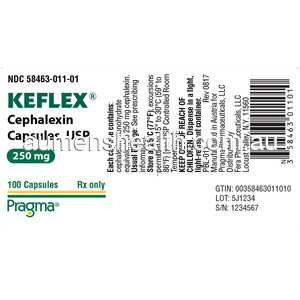
What is Keflex used for?
They arise from the antibacterial activity and pharmacokinetic characteristics of cephalexin. They take into account both the clinical studies the drug has led to and its place in the range of antibacterial products currently available.
They are limited to infections due to sensitive germs when these infections authorize oral antibiotic therapy and to the exclusion of subarachnoid locations, in particular:
Otorhinolaryngological infections: documented angina with beta-hemolytic streptococcus A, sinusitis, otitis;
Lower respiratory tract infections:
osurinfections of acute bronchitis,
or exacerbations of chronic bronchitis,
community opneumopathies in subjects:
§Without risk factor,
§ without any sign of clinical seriousness,
§ in the absence of any argument raising the fear of S. pneumoniae resistance to penicillin,
§ in the absence of an argument suggesting atypical pneumonitis;
· Uncomplicated urinary tract infections, except prostatitis and pyelonephritis.
Official recommendations on the proper use of antibacterials should be taken into account.
Conditions for which this medicine may be prescribed
- Beta-hemolytic strep throat
- Sinusitis
- Otitis
- Acute bronchitis
- Exacerbation of chronic bronchitis.
- Community lung disease
- Uncomplicated urinary tract infection, except prostatitis and pyelonephritis
Method of administration and dosage of the drug Keflex
Dose
In the subject with normal kidney functions.
Adults
2 g per day in at least two doses.
Children over 6 years old
25 to 50 mg / kg for 24 hours in at least two doses, not exceeding the adult dose.
In subjects with kidney failure.
| Creatinine clearance (ml / min) | Loading dose (mg) | Dose (mg) | Interval (h) |
| 30 - 60 | ---- | 500 | 12 |
| 10 - 30 | 500 | 500 | 24 |
| 5 - 10 | 250 | 250 | 12 |
| ≤ 5 | 250 | 250 | 24 |
Pediatric population
Keforal film-coated tablet should not be used in children younger than 6 years due to the pharmaceutical form.
Treatment duration.
Treatment duration is 7-10 days on average for all therapeutic indications, up to 14 days for pneumonia.
The duration of treatment for angina is 10 days.
Administration form
To be taken preferably outside meals, especially in children due to a 40% reduced bioavailability with milk intake.
Mixing instructions
Turn the bottle over and tap to loosen the powder before adding the water. Add the water twice to reach the red arrow marked on the bottle. Return the cap to the vial and rotate quickly until all of the powder is in suspension.
Possible side effects of Keflex
- Allergic rash
- Fever
- Anaphylactic shock
- Angioedema
- Anogenital itching
- Anogenital candidiasis
- Polymorphic erythema
- Stevens-Johnson syndrome
- Lyell syndrome
- Generalized acute exanthematous pustulosis
- Eosinophilia
- Thrombocytopenia
- Leukopenia
- Hemolytic anemia
- Diarrhea
- Sickness
- Vomiting
- Pseudomembranous colitis
- Elevated transaminases
- Hepatic injury
- Jaundice
- Interstitial nephritis
Show more · Allergic manifestations: skin rash, fever, anaphylactic shock, angioedema, anogenital pruritus (with or without candidiasis), very rare erythema multiforme, Stevens-Johnson syndrome, Lyell syndrome.
Skin and subcutaneous tissue disorders: generalized acute exanthematous pustulosis (PEAG)
Hematologic manifestations: eosinophilia, thrombocytopenia, reversible leukopenia at the end of treatment, hemolytic anemia.
· Digestive manifestations: diarrhea, nausea, vomiting. As with other broad-spectrum antibiotics, rare cases of pseudomembranous colitis have been reported.
Liver manifestations: transient elevation of ASAT and ALAT transaminases, liver damage, jaundice.
Nephrotoxicity: As with other cephalosporins, some rare cases of reversible interstitial nephritis have been reported.
As with any antibiotic, prolonged use of the drug can cause resistance to the germs involved.
Betalactamines are exposed to the risk of encephalopathy (confusion, disorders of consciousness, epilepsy, or abnormal movements), and in particular in case of overdose or renal failure.
Notification of suspected adverse reactions.
Notification of suspected adverse reactions after authorization of the medicinal product is important. Allows continuous monitoring of the benefit / risk ratio of the medication. Health professionals report any suspected adverse reaction through the national reporting system: National Agency for the Safety of Medicines and Health Products (ANSM) and the network of Regional Pharmacovigilance Centers
Contraindications: when not to use this medicine?
- Cephalosporin allergy
- Allura AC network hypersensitivity
- Fructose intolerance
- Glucose malabsorption syndrome
- Galactose malabsorption syndrome
- Sucrase-isomaltase deficiency
This medicine should never be used:
In case of allergy to antibiotics from the cephalosporin group.
Presentation of this medicine
39.60 g of powder in a vial (polyethylene) corresponding to 60 ml of suspension after reconstitution.
Appearance and shape
Powder for oral suspension in bottle.
Keflex: its other forms
- Keflex 1 g, film-coated tablet, box of 1 blister of 6
- Keflex 125 mg / 5 ml, powder for oral suspension in bottle, 60 ml reconstituted suspension bottle.
- Keflex 500 mg film-coated tablet, box of 1 blister of 10
Composition of the drug Keflex
| Active principle | Powder for oral suspension. |
| Cephalexin monohydrate | 250 mg * |
* per unit dose Active ingredients: cephalexin monohydrate Excipients with known effects? : Sucrose Other excipients: sodium lauryl sulfate, Allura red, methylcellulose 15, dimethicone 350, xanthan gum, pregelatinized starch, guarana flavor (51880 TP): gum arabic, propylene glycol, orange essential oil, benzyl alcohol, vanillin, butyrate ethyl, amyl acetate, allyl caproate Effects on ability to drive and use machines
Kéforal 250 mg / 5 ml, powder for oral suspension in a vial, may have a significant influence on the ability to drive and use machines, in particular due to the possible occurrence of encephalopathy (see sections Warnings and precautions for work, adverse effects , overdose)
Warnings and precautions for use
- Skin monitoring
- Allergic skin reaction
- Penicillin allergy
- Kidney failure (Clcr minus 60 ml / min)
- Diarrhea due to antibiotic treatment.
- Pseudomembranous colitis
- Diabetes
- Carbohydrate diet
- Breastfeeding
Show more · The appearance of any allergic manifestation requires the cessation of treatment.
· Cases of generalized acute exanthematous pustulosis (PEAG) have been reported in the course of cephalexin treatment. At the time of prescription, patients should be informed of signs and symptoms, and closely monitored for skin reactions. If signs or symptoms suggestive of any of these reactions appear, cephalexin should be discontinued immediately and replacement therapy should be considered. Most of these reactions are likely to have occurred within the first week of treatment.
· The prescription of cephalosporins requires a previous examination.
Penicillin allergy intersects with cephalosporin allergy in 5-10% of cases:
o the use of cephalosporins must be extremely careful in patients sensitive to penicillin; strict medical supervision is necessary from the first administration,
The use of cephalosporins should be strictly prohibited in subjects with a history of immediate allergy to cephalosporins. When in doubt, the presence of the doctor with the patient is essential for the first administration to treat the possible anaphylactic accident.
The hypersensitivity reactions (anaphylaxis) observed with these 2 types of substances can be serious and sometimes fatal.
In case of renal impairment, adjust the dose according to the creatinine or creatinine clearance (see section 4.2).
It is prudent to monitor renal function during treatment if cephalexin is combined with potentially nephrotoxic antibiotics (especially aminoglycosides) or with strong diuretics.
As with other broad-spectrum antibiotics, prolonged use of cephalexin may lead to the selection of non-susceptible organisms, which may require discontinuation of treatment.
The exceptional occurrence of severe and persistent diarrhea during or after antibiotic use may be symptomatic of pseudomembranous colitis and requires discontinuation of treatment. The diagnosis established after colonoscopy requires the initiation of specific antibiotic therapy.
Betalactamines are exposed to the risk of encephalopathy (confusion, disorders of consciousness, epilepsy, or abnormal movements), and in particular in case of overdose or renal failure.
Paraclinical exams
· A positive Coombs test was obtained during treatment with cephalosporins. This could also occur in subjects treated with cephalexin.
· A false positive reaction may occur when testing glucose in the urine with reducing substances, but not when using specific glucose oxidase methods.
Cephalexin may interfere with the detection of creatinine by alkaline picrates, giving a false high result, probably of no clinical significance.
This medicine contains sucrose. Patients with fructose intolerance, glucose-galactose malabsorption syndrome, or sucrase / isomaltase deficiency (rare inherited diseases) should not take this medicine.
Mechanism of action: how does it work?
Pharmacotherapeutic group: ANTIBACTERIALS FOR SYSTEMIC USE, ATC code: J01DA01 (J: Antiinfectives).
Antibacterial antibiotic from the beta-lactam family of the first-generation cephalosporin group.
This bactericidal antibiotic works by inhibiting the synthesis of the bacterial wall.
SPECTRUM OF ANTIBACTERIAL ACTIVITY
Critical concentrations separate the sensitive strains from the intermediate and the last resistant strains:
S £ 8 mg / l and R plus 32 mg / l
The prevalence of acquired resistance can vary depending on the geography and time of certain species. Therefore, it is useful to have information on the prevalence of local resistance, especially for the treatment of serious infections. These data can only provide guidance on the probabilities of the sensitivity of a bacterial strain to this antibiotic.
When the variability in the prevalence of resistance in Australia is known for a bacterial species, it is indicated in the table below:
| Categories | Frequency of resistance acquired in Australia (plus 10%) (extreme values) | |
| SENSITIVE SPECIES | ||
| Gram positive aerobes | ||
| Corynebacterium diphtheriae | ||
| Propionibacterium acnes | ||
| Staphylococcus meti-S | ||
| Streptococcus | ||
| Streptococcus pneumoniae | 30 - 70% | |
| Gram negative aerobes | ||
| Branhamella catarrhalis | ||
| Citrobacter koseri | ||
| Escherichia coli | 20-30% | |
| Klebsiella | 0-30% | |
| Neisseria gonorrhoeae | ||
| Pasteurella | ||
| Fusobacterium | 10-20% | |
| Pre-bottle | 60 - 70% | |
| MODERATELY SENSITIVE SPECIES | ||
| (in vitro intermediate sensitivity) | ||
| Gram negative aerobes | ||
| Haemophilus influenzae | ||
| Proteus mirabilis | ||
| Anaerobes | ||
| Clostridium perfringens | ||
| Peptostreptococcus | ||
| RESISTANT SPECIES | ||
| Gram positive aerobes | ||
| Enterococci | ||
| Listeria monocytogenes | ||
| Staphylococcus meti-R * | ||
| Gram negative aerobes | ||
| Acinetobacter | ||
| Citrobacter freundii | ||
| Enterobacter | ||
| Morganella morganii | ||
| Proteus vulgaris | ||
| Providence | ||
| Pseudomonas | ||
| Serratia | ||
| Anaerobes | ||
| Bacteroides | ||
| Clostridium difficile |
* The frequency of methicillin resistance is approximately 30 to 50% of all staphylococci and is found mainly in hospitals.
Interactions: do not take this medicine with ..
Special INR imbalance problems
Many cases of increased oral anticoagulant activity have been reported in patients receiving antibiotics. The marked infectious or inflammatory context, the age and the general condition of the patient seem to be risk factors. Under these circumstances, it seems difficult to draw a line between infectious disease and its treatment in the event of INR imbalance. However, certain classes of antibiotics are more involved: these include fluoroquinolones, macrolides, cyclins, cotrimoxazole, and certain cephalosporins.
Incompatibilities
Aimlessly.
How to react in case of overdose?
symptom
Nausea, vomiting, epigastric pain, diarrhea, and hematuria can occur after a cephalexin overdose.
Processing
Symptomatic treatment and monitoring of vital signs should be carried out. The absorption of the drug from the gastrointestinal tract can be decreased by the administration of activated carbon. The efficacy of treatments such as forced diuresis, peritoneal dialysis, hemodialysis, or carbon hemoperfusion has not been demonstrated in the treatment of overdoses.
Betalactamines are exposed to the risk of encephalopathy (confusion, disorders of consciousness, epilepsy, or abnormal movements), and in particular in case of overdose or renal failure.
Keflex: pregnancy, lactation and fertility
Pregnancy
Animal studies have not shown any teratogenic effects. In the absence of a teratogenic effect in animals, a malformation effect is not expected in the human species. In fact, to date, the substances responsible for malformations in the human species have been shown to be teratogenic in animals during well-conducted studies in two species.
In clinical studies, analysis of large numbers of exposed pregnancies did not appear to reveal any particular malformation or fetotoxic effect of cephalexin. However, only epidemiological studies were able to verify the absence of risk.
As a result, cephalexin may be prescribed during pregnancy if necessary.
Breastfeeding
The passage of cephalexin in breast milk is low and the amounts ingested are much lower than the therapeutic doses. As a result, breastfeeding is possible when taking this antibiotic.
However, stop breastfeeding (or medications) if diarrhea, candidiasis, or a rash occurs in the baby.
| Package | Price |
|---|---|
| 250 mg 360 pills | AUD 316.18 |
| 250 mg 180 pills | AUD 175.48 |
| 250 mg 120 pills | AUD 130.09 |
| 250 mg 90 pills | AUD 108.91 |
| 250 mg 60 pills | AUD 80.17 |
| 250 mg 30 pills | AUD 49.91 |
| 500 mg 360 pills | AUD 440.24 |
| 500 mg 180 pills | AUD 245.08 |
| 500 mg 120 pills | AUD 181.53 |
| 500 mg 90 pills | AUD 151.28 |
| 500 mg 60 pills | AUD 111.94 |
| 500 mg 30 pills | AUD 69.58 |