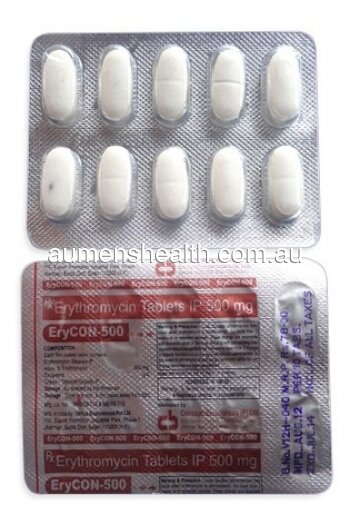
What is Erythromycin used for?
Therapeutic indications derive from the antibacterial activity and pharmacokinetic characteristics of erythromycin. They take into account both the clinical studies that this drug has led to and its place in the range of antibacterial products currently available.
They are limited to infections caused by germs defined as sensitive, particularly in the following manifestations:
· Documented angina with beta-hemolytic streptococcus A, as an alternative to treatment with beta-lactams, particularly when it cannot be used.
· Acute sinusitis. Given the microbiological profile of these infections, macrolides are indicated when beta-lactam treatment is impossible.
· Superinfections of acute bronchitis.
· Exacerbations of chronic bronchitis.
Community lung diseases in subjects:
or without risk factors,
or without signs of clinical seriousness,
or in the absence of clinical elements that suggest a pneumococcal etiology.
In case of suspected atypical pneumonia, macrolides are indicated regardless of severity and terrain.
· Benign skin infections: impetigo, dermatitis impetitis, ecthyma, infectious dermopodermitis (in particular erysipelas), erythrasma, minor to moderate inflammatory acne, and an inflammatory component of mixed acne, when these cannot be treated use.
· Stomatological infections.
· Non-gonococcal genital infections.
Chemoprophylaxis of relapses of RAA in case of allergy to beta-lactams.
Official recommendations on the proper use of antibacterials should be taken into account.
Conditions for which this medicine may be prescribed
- Beta-hemolytic strep throat
- Acute sinusitis
- Bacterial superinfection of acute bronchitis.
- Exacerbation of chronic bronchitis.
- Community lung disease
- Atypical pneumonia
- Impetigo
- Impetiginization of dermatosis
- Ecthyma
- Infectious dermohypodermitis
- Erythrasma
- The acne
- Stomatological infection
- Non-gonococcal genital infection
- Recurrent AAR chemoprophylaxis
Method of administration and dosage of the medicine Erythromycin
Dose
ORAL ROUTE
This medicine is suitable for adults and children weighing 25 kg (approximately from 8 years old).
Adult: 2 to 3 g per day, that is, 2 sachets 2 to 3 times a day.
Particular case:
Acne: 1 g per day, or 1 sachet twice a day for at least 3 months.
Child: 30 to 50 mg / kg per day.
Between 25 and 35 kg (approximately between 8 and 12 years old): 1 sachet twice a day.
Between 35 and 50 kg (approximately between 12 and 15 years): 1 sachet three times a day.
Taking before meals ensures the best serum levels.
Treatment duration.
The duration of treatment for angina is 10 days.
Possible side effects of Erythrocin
- Hypersensitivity
- Anaphylactic reaction
- Ototoxicity
- Hearing loss
- Tinnitus
- QT space extension
- Torsades de pointes
- Sickness
- Vomiting
- Gastralgia
- Diarrhea
- Pseudomembranous colitis
- Pancreatitis
- Hepatic injury
- Elevation of alkaline phosphatases.
- Elevated transaminases
- Jaundice
- Fever
- Acute abdominal pain
- Polymorphic erythema
- Lyell syndrome
- Stevens-Johnson syndrome
- Interstitial nephritis
- Allergic reaction
Show more The list of unwanted effects presented below is presented by classes of organ systems, according to MedDRA preferences, and the frequencies used follow the following frequency categories: very common (≥1 / 10), common (≥ 1/100 to minus 1/10), rare (≥1 / 1,000 to minus 1/100), rare (≥1 / 10,000 to minus 1/1000), very rare (minus 1 / 10,000) and unknown (cannot be estimated from the available data)
| Organ system classification | Frequency | Undesirable effects |
| Immune system disorders. | Indeterminate | Hypersensitivity, anaphylactic reactions. |
| Ear and labyrinth disorders. | Indeterminate | Ototoxicity in elderly patients with renal or hepatic insufficiency, cases of hearing loss (deafness) and isolated tinnitus generally regressive at the end of treatment, mainly in patients with renal insufficiency or in those treated with massive erythromycin doses |
| Heart conditions | Indeterminate | QT interval lengthening, torsades de pointe |
| Gastrointestinal disorders. | Indeterminate | Nausea, vomiting, gastralgia, diarrhea, pseudomembranous colitis *, hypertrophic pyloric stenosis |
| Rare | Pancreatitis ** | |
| Hepatobiliary disorders. | Rare | Liver problems with high alkaline phosphatases and / or transaminases *** |
| Skin and subcutaneous tissue disorders. | Indeterminate | Polymorphic erythema, Lyell syndrome, Stevens Johnson syndrome, generalized acute exanthematous pustulosis (PEAG) |
| Kidney and urinary tract disorders. | Indeterminate | Interstitial nephritis |
* Exceptional cases of pseudomembranous colitis have been reported.
** Rare cases of pancreatitis have been reported that can occur rapidly after initiation of treatment, especially when using a high dose or during an overdose.
*** sometimes with clinical manifestations (jaundice, fever) possibly associated with "acute abdominal pain". The appearance of clinical signs requires the immediate cessation of treatment.
Contraindications: when not to use this medicine?
- Erythromycin hypersensitivity
- Orange-yellow hypersensitivity S
- Macrolide hypersensitivity
- Fructose intolerance
- Sucrase / isomaltase deficiency
- Glucose and galactose malabsorption syndrome
- Liver failure
- Breastfeeding
This medicine should NEVER BE USED in the following situations:
Hypersensitivity to erythromycin, other macrolides, or any of the excipients listed in the Composition section,
· Association with:
or ergot vasoconstrictor alkaloids: dihydroergotamine, ergotamine, methylergometrine, methysergide
or alfuzosin
or colchicine
or dapoxetine
or domperidone
or dronedarone
or eplerenone
or ivabradine
or lomitapide
or mizolastine
or ombitasvir, paritaprevir
or pimozide
or quetiapine
or ranolazine
or simvastatin
or ticagrelor
(See section Interaction with other medications and other forms of interaction)
Presentation of this medicine
4.75 g heat-sealable paper / polyethylene / aluminum / polyethylene dose envelope. Box of 12, 16 or 20.
4.75 g Kraft / polyethylene / polyvinylidene chloride heat sealable dose sachet. Box of 12, 16 or 20.
Appearance and shape
Granules for oral solution in sachet.
Erythromycin: its other forms
- Erythromycin 1000 mg Granule for oral solution box of 10 sachets
- Erythromycin 500 mg film-coated tablet, 20
- Erythromycin 500 mg / 5 ml, syrup granules, 60 ml reconstituted syrup bottle
- Erythromycin 250 mg / 5 ml, syrup granules, 60 ml reconstituted syrup bottle
- Erythromycin 500 mg, granules for oral solution in sachet, box of 12 sachets
- Erythromycin 1000 mg, granules for oral solution in sachet, box of 10 sachets
- Erythromycin 0.5 g, lyophilisate for parenteral use (IV), box of 1 bottle of ½ g
See all forms of the drug Composition of the drug Erythrocin
| Active principle | Granules for oral solution. |
| Erythromycin | 500 mg * |
* per unit dose Active ingredients: erythromycin Excipients with known effects? : Orange yellow S, sucrose, presence of: sodium Other excipients: sodium citrate dihydrate, colloidal complex of aluminum magnesium silicate, saccharin sodium, carmellose sodium, colloidal silica anhydrous 200, Poloxamer 188, orange flavoring: essential oil orange, maltodextrin, vegetable gum, effects on the ability to drive and use machines
Aimlessly.
Warnings and precautions for use
- Doses limited to adults and children over 25 kg.
- Diarrhea that occurs during antibiotic treatment.
- QT prolongation interval
- Hypokalemia
- Hypomagnesemia
- Bradycardia
- Cardiac arrhythmia
- Severe heart failure
- Clinical signs of liver dysfunction.
- Low sodium diet
- Dehydrated diet
- Carbohydrate diet
- Diabetes
Show more Special warnings
Clostridium difficile-associated diarrhea (DACD) has been reported with the use of virtually all antibiotics, including erythromycin. The severity of DACD can range from mild to life threatening, with the most severe form being pseudomembranous colitis (see section 4.8). Therefore, it is important to consider this diagnosis in patients who develop severe diarrhea during or after erythromycin treatment. If DACD is suspected or confirmed, erythromycin should be discontinued immediately and appropriate treatment should be started without delay. Medications that inhibit peristalsis are contraindicated in patients who develop severe diarrhea.
Exceptional cases of hypertrophic pyloric stenosis have been reported in newborns without the mechanism being established. The benefits of erythromycin therapy must be weighed against the potential risk of developing hypertrophic pyloric stenosis. Parents should be informed of the importance of immediately informing their doctor if they vomit or are irritable during feeding.
Cases of prolonged cardiac repolarization and QT prolongation, involving a risk of cardiac arrhythmia and torsade de pointes, have been observed during treatment with macrolides (see section 4.8). Exceptional cases have been reported with oral erythromycin. Since the following situations may lead to an increased risk of ventricular arrhythmia (including torsades de pointes) that can lead to death, caution is recommended when treating patients with erythromycin:
· Have a prolonged congenital or documented QT interval.
You are currently receiving treatment with other active substances known to prolong the QT interval (see section Interactions with other medicinal products and other forms of interaction).
You have an electrolyte disorder, especially in cases of hypokalemia and hypomagnesemia.
With clinically significant bradycardia, cardiac arrhythmia, or severe heart failure.
Women and elderly patients may also be more sensitive to treatments that prolong the QT interval.
HMG-CoA reductase inhibitors (statins) metabolized by CYP 3A4 and risk of rhabdomyolysis:
Erythromycin causes an increase in plasma concentrations of statins that are metabolized by CYP3A4, which increases the risk of myopathy, in particular rhabdomyolysis. As simvastatin is primarily metabolized by CYP3A4, its concomitant use with erythromycin is contraindicated (see sections Contraindications and interactions with other medicinal products and other forms of interaction). If erythromycin treatment is essential, simvastatin treatment should be discontinued for the duration of erythromycin treatment.
The combination of erythromycin with other statins metabolized by CYP3A4 (atorvastatin) should be avoided as far as possible (see section Interactions with other medicinal products and other forms of interaction). If concomitant use of erythromycin with atorvastatin is necessary, a lower dose of atorvastatin is recommended and the appearance of signs or symptoms of myopathy should be monitored.
The use of a statin that is not dependent on CYP3A metabolism may be considered.
Administration of erythromycin is not recommended in patients with hepatic impairment. If necessary, warrants regular monitoring of liver tests and possibly a reduction in dose.
Due to the presence of sucrose, this medication is contraindicated in cases of fructose intolerance, glucose-galactose malabsorption syndrome, or sucrose-isomaltase deficiency.
This medicine contains 3.7 g of sucrose per sachet: keep this in mind in the daily ration.
This medicine contains 65 mg of sodium per sachet: keep this in mind in people on a strict sodium diet.
Interactions with paraclinical exams.
Erythromycin, like other antibiotics, can interfere with catecholamine doses in the urine by fluorescence. This interference can be observed mainly with non-chromatographic techniques and, to a lesser extent, after chromatographic separation.
As with other macrolides, rare and serious allergic reactions have been reported, including generalized acute exanthematous pustulosis (PEAG). If an allergic reaction occurs, the drug should be discontinued and appropriate treatment should be started. Physicians should be informed of the possibility of recurrence of allergic symptoms when symptomatic treatment is discontinued.
Mechanism of action: how does it work?
Pharmacotherapeutic group: ANTIBACTERIALS for systemic use, ATC code: J01FA01
Mechanism of action
Erythromycin is an antibiotic in the macrolide family.
Erythromycin works by inhibiting bacterial protein synthesis by binding to the 50 S part of the ribosomal subunit of sensitive microorganisms and by preventing translocation of peptides.
Spectrum of antibacterial activity
Critical concentrations separate the sensitive strains from the intermediate and the last resistant strains:
S ≤ 1 mg / l and R plus 4 mg / l
The prevalence of acquired resistance can vary depending on the geography and time of certain species. Therefore, it is useful to have information on the prevalence of local resistance, especially for the treatment of serious infections.
These data can only provide guidance on the probabilities of the sensitivity of a bacterial strain to this antibiotic.
When the variability in the prevalence of resistance in Australia is known for a bacterial species, it is indicated in the table below:
| Categories | Frequency of resistance acquired in Australia (plus 10%) (extreme values) |
| SENSITIVE SPECIES | |
| Gram positive aerobes | |
| Bacillus cereus | |
| Corynebacterium diphtheriae | |
| Enterococci | 50 - 70% |
| Rhodococcus equi | |
| Staphylococcus meti-S | |
| Staphylococcus meti-R * | 70 - 80% |
| Streptococcus B | |
| Non-grouping streptococcus | 30 - 40% |
| Streptococcus pneumoniae | 35 - 70% |
| Streptococcus pyogenes | 16 - 31% |
| Gram negative aerobes | |
| Bordetella pertussis | |
| Branhamella catarrhalis | |
| Campylobacter | |
| Legionella | |
| Moraxella | |
| Anaerobes | |
| Actinomyces | |
| Bacteroides | 30 - 60% |
| Eubacterium | |
| Mobiluncus | |
| Peptostreptococcus | 30 - 40% |
| Porphyromonas | |
| Pre-bottle | |
| Propionibacterium acnes |
| Categories | Frequency of resistance acquired in Australia (plus 10%) (extreme values) |
| Others | |
| Borrelia burgdorferi | |
| Chlamydia | |
| Coxiella | |
| Leptospires | |
| Mycoplasma pneumoniae | |
| Treponema pallidum | |
| MODERATELY SENSITIVE SPECIES | |
| (in vitro intermediate sensitivity) | |
| Gram negative aerobes | |
| Haemophilus | |
| Neisseria gonorrhoeae | |
| Anaerobes | |
| Clostridium perfringens | |
| Others | |
| Ureaplasma urealyticum | |
| RESISTANT SPECIES | |
| Gram positive aerobes | |
| Corynebacterium jeikeium | |
| Nocardia asteroids | |
| Gram negative aerobes | |
| Acinetobacter | |
| Enterobacteriaceae | |
| Pseudomonas | |
| Anaerobes | |
| Fusobacterium | |
| Others | |
| Mycoplasma hominis |
* The frequency of methicillin resistance is approximately 30 to 50% of all staphylococci and is found mainly in hospitals.
Note: most Haemophilus influenzae strains are prone to concentrations reached after regular doses.
Interactions: do not take this medicine with ..
Strong CYP3A4 inhibitors
Erythromycin is a CYP3A4 inhibitor. It has the ability to strongly inhibit cytochrome P450-3A4, an enzyme that participates in the metabolism of many drugs. When the activity of this enzyme is inhibited, it can no longer metabolize the drug that will later accumulate. If the therapeutic range of this drug is narrow and there is no other effective metabolic pathway, the risk of observing a clinically significant interaction becomes high.
Contraindicated associations
+ Ergot rye vasoconstrictor alkaloids (dihydroergotamine, ergotamine, methylergometrine, methysergide)
Risk of coronary or limb vasoconstriction (ergotism with the possibility of limb necrosis), or hypertensive attacks due to reduced liver elimination of ergot alkaloids.
+ Alfuzosin
Risk of increased plasma concentrations of alfuzosin and its side effects.
+ Colchicine
Increased undesirable effects of colchicine, with potentially fatal consequences.
+ Dapoxetine
Risk of increased unwanted effects, particularly with dizziness or syncope.
+ Domperidone
Increased plasma concentrations of domperidone metabolized by cytochrome P450-3A4 during erythromycin administration.
Adequate monitoring should be established and the dose should be adjusted, if necessary.
+ Dronedarone
Significant increase in dronedarone concentrations by decreasing its metabolism.
+ Eplerenone
Risk of increased plasma concentrations of eplerenone by the inhibitor and these side effects, including hyperkalemia.
+ Ivabradine
Increased plasma concentrations of ivabradine and, therefore, its undesirable effects (inhibition of its hepatic metabolism by the inhibitor).
+ Lomitapide
Increased plasma concentrations of lomitapide by reducing its hepatic metabolism by the inhibitor.
+ Mizolastine
Increased risk of ventricular rhythm disturbances, especially torsades de pointes.
+ Ombitasvir, Paritaprévir
Increased plasma concentrations of dual therapy by reducing your liver metabolism by the inhibitor.
+ Pimozide
Increased risk of ventricular rhythm disturbances, especially torsade de pointes.
+ Quetiapine
Significant increase in quetiapine concentrations, with risk of overdose.
+ Ranolazine
Increased ranolazine concentrations by decreasing your metabolism by the inhibitor.
+ Simvastatin
Increased risk of unwanted (concentration-dependent) effects such as rhabdomyolysis (decreased liver metabolism to lower cholesterol).
+ Ticagrelor
Increased plasma concentrations of ticagrelor by reducing its hepatic metabolism by the inhibitor.
Associations not recommended
+ Rye alkaloids dopamine rye (bromocriptine, cabergoline, lisuride, pergolide)
Increased plasma concentrations of dopaminergic agents with possible increase in their activity or appearance of signs of overdose.
+ Apixaban
Increased plasma concentrations of apixaban by the inhibitor, with an increased risk of bleeding.
+ Bedaquiline
Increased plasma concentrations of bedaquillin by reducing its hepatic metabolism by the inhibitor.
If the combination is necessary, more frequent monitoring of the ECG and transaminase is recommended.
+ Buspirona
Increased plasma concentrations of the anxiolytic by reducing its hepatic metabolism with a significant increase in sedation.
+ Carbamazepine
Increased plasma concentrations of carbamazepine with signs of overdose due to inhibition of its hepatic metabolism.
It is possible to use other macrolides (except spiramycin) whose clinical interference is currently considered minimal or nil. However, in legionnaires' disease, erythromycin remains the standard antibiotic; If this antibiotic is used, clinical monitoring with control of plasma carbamazepine concentrations in a specialized setting is desirable.
+ Disopyramide
Risk of increased undesirable effects of disopyramide: severe hypoglycaemia, QT prolongation, and severe ventricular rhythm disturbances, particularly with torsade de pointes.
Regular clinical, biological and electrocardiographic monitoring.
+ Ebastine (antihistamine H1)
Increased risk of ventricular rhythm disorders, especially in predisposed subjects (congenital long QT syndrome).
+ Fesoterodine
Increased concentrations of fesoterodine in slow metabolizers, with risk of overdose.
+ Fidaxomycin
Increased plasma fidaxomycin concentrations.
+ Halofantrine
Increased risk of ventricular rhythm disturbances, especially torsade de pointes.
If possible, discontinue the macrolide. If association cannot be avoided, prior QT control and monitored ECG monitoring.
+ Immunosuppressants (cyclosporine, everolimus, sirolimus, tacrolimus)
Very significant increase in blood concentrations of the immunosuppressant by inhibition of its hepatic metabolism.
In case of association, strict control of renal function, measurement of immunosuppressant blood concentrations and possible dosage adjustment.
+ Metabolic tyrosine kinase inhibitors: bosutinib and ibrutinib
Risk of increased adverse effects of the tyrosine kinase inhibitor due to a decrease in its metabolism.
If the combination with ibrutinib cannot be avoided, dose adjustment of ibrutinib or temporary interruption (approximately 7 days).
+ Irinotecan
Risk of increased undesirable effects of irinotecan by increasing plasma concentrations of its active metabolite.
+ Lumefantrine
Increased risk of ventricular rhythm disturbances, especially torsade de pointes.
If possible, discontinue the associated torsogen. If association cannot be avoided, prior QT control and monitored ECG monitoring.
+ Oxycodone
Increased plasma oxycodone concentrations.
Clinical monitoring and possible adaptation of the oxycodone dose during treatment with the enzyme inhibitor.
+ Regorafenib
Increased plasma concentrations of regorafenib by reducing its hepatic metabolism by the inhibitor.
+ Riociguat
Increased plasma concentrations of riociguat by reducing its hepatic metabolism by the inhibitor.
+ Rivaroxaban
Increased plasma concentrations of rivaroxaban, with increased risk of bleeding.
+ Simeprevir
Risk of increased plasma concentrations of simeprevir due to reduced hepatic metabolism by the inhibitor
+ Tamsulosin
Risk of increased undesirable effects of tamsulosin, by inhibiting its hepatic metabolism.
+ Theophylline and by extrapolation aminophylline
Theophylline overdose (reduction in liver clearance), more particularly dangerous in children.
It is possible to use the other macrolides (except spiramycin), whose clinical interference is currently considered minimal or nil. However, in the case of legionellosis, erythromycin remains the reference antibiotic; If this antibiotic is used, clinical monitoring with control of plasma theophylline concentrations in specialized settings is desirable.
+ Tolterodine
Increased plasma tolterodine concentrations in slow metabolizers, with risk of overdose.
Associations subject to precautions for use.
+ Afatinib
Increased plasma concentrations of afatinib by increasing its absorption by erythromycin. It is recommended that erythromycin be administered as far as possible from afatinib, preferably taking an interval of 6 or 12 hours after taking afatinib.
+ Alfentanil
Increased respiratory depressant effect of the opioid analgesic due to decreased hepatic metabolism.
Clinical monitoring and dose adjustment of the opioid analgesic in case of treatment with erythromycin.
+ Calcium channel antagonists
Increased undesirable effects of the calcium channel antagonist, most often with a type of hypotension, especially in the elderly.
Clinical monitoring and dose adjustment during erythromycin treatment and after discontinuation.
+ Antivitamins K
Greater effect of antivitamin K and the risk of bleeding. More frequent INR monitoring. Antivitamin K dose adaptation during erythromycin treatment and after discontinuation.
+ Atorvastatin
Increased risk of unwanted (concentration-dependent) effects such as rhabdomyolysis (due to reduced liver metabolism to lower cholesterol). Use lower doses of cholesterol. If the therapeutic goal is not reached, use another statin unaffected by this type of interaction.
+ Bortezomib
Risk of increased undesirable effects, in particular neurological effects, of bortezomib due to reduced metabolism.
Clinical monitoring and possible dose adjustment of bortezomib during treatment with the enzyme inhibitor.
+ Carbazitaxel
Risk of increased dose-dependent undesirable effects of carbazitaxel by inhibition of its metabolism by the enzyme inhibitor.
Clinical monitoring and possible dose adjustment of carbazitaxel during treatment with the enzyme inhibitor.
+ Daclatasvir
Increased daclatasvir concentrations by the inhibitor.
The daclatasvir dose should be reduced to 30 mg once daily when co-administered with the inhibitor.
+ Darifenacin
Increased darifenacin concentrations, with the risk of increasing its undesirable effects.
Clinical monitoring and possible adaptation of the dose of darifenacin.
+ Digoxin
Increased digoxinemia due to increased absorption.
Clinical monitoring and possibly digoxinemia during and after treatment with erythromycin.
+ Docetaxel
Risk of increased dose-dependent adverse effects of docetaxel due to inhibition of its metabolism by the enzyme inhibitor.
Clinical monitoring and possible adaptation of the dose of docetaxel during treatment with the enzyme inhibitor.
+ Fentanyl
Increased respiratory depressant effect of the opioid analgesic due to decreased hepatic metabolism.
Clinical monitoring and dose adjustment of the opioid analgesic in case of treatment with a strong CYP3A4 inhibitor.
+ Glibenclamide and glimepiride
Risk of hypoglycemia due to increased absorption and plasma concentrations of the antidiabetic.
Warn the patient, reinforce glycemic self-control and possibly adjust the dose of sulfonylurea during treatment with erythromycin.
+ Phosphodiesterase type 5 inhibitors
Increased plasma concentrations of PDE 5 inhibitor with risk of hypotension.
Begin treatment with the PDE5 inhibitor at the lowest dose if combined with one of these medications.
+ Tyrosine kinase inhibitors other than bosutinib and ibrutinib (see combinations not recommended) and vandetanib (combinations should not be considered)
Risk of increased adverse effects of the tyrosine kinase inhibitor due to a decrease in its metabolism. Clinical surveillance
+ Ivacaftor
Significant increase in ivacaftor concentrations, with the risk of increasing undesirable effects.
Reduce the dose by a quarter, to 150 mg every other day.
+ Maraviroc
Increased concentrations of Maraviroc by the inhibitor.
Maraviroc dose should be reduced to 150 mg twice daily when co-administered with this inhibitor.
+ Midazolam
Increased plasma concentrations of midazolam by reducing liver metabolism, with increased sedation, especially in children.
Clinical monitoring and dose reduction of midazolam during erythromycin treatment.
+ Pravastatin
Increased plasma concentration of pravastatin by erythromycin.
Clinical and biological monitoring during antibiotic treatment.
+ Quinine
Risk of increased undesirable effects of quinine, in particular ventricular rhythm disorders and sensorineural disorders (cynonism).
Clinical monitoring and ECG. Possible quinine dose adjustment during treatment with the enzyme inhibitor and after discontinuation.
+ Solifenacin
Increased solifenacin concentrations, with risk of overdose.
Clinical monitoring and possible adaptation of the dose of solifenacin.
+ Sufentanil
Increased respiratory depressant effect of the opioid analgesic due to decreased hepatic metabolism.
Clinical monitoring and dose adjustment of the opioid analgesic in case of treatment with a strong CYP3A4 inhibitor.
+ Verapamil
Disorders of bradycardia and / or atrioventricular conduction, due to reduced hepatic metabolism of verapamil by erythromycin.
Clinical monitoring and ECG; If necessary, adjust the dose of verapamil during erythromycin treatment and after discontinuation.
Vinca cytotoxic alkaloids
Risk of increased toxicity of the antimitotic due to reduced metabolism of hepatitis by erythromycin. Close clinical and biological monitoring. Optionally, use another antibiotic.
Associations to consider
+ Dexamethasone
Increase in plasma concentrations of dexamethasone through the reduction of its hepatic metabolism by erythromycin, with the risk of developing a cushingoid syndrome.
+ Idélalisib
Increased plasma concentrations of idelalisib by decreasing your liver metabolism by the inhibitor.
+ CYP3A4 Risk Substrates
Increase in the specific undesirable effects of each substrate, with often serious consequences.
+ Venlafaxine
Increased plasma concentrations of venlafaxine with risk of overdose.
+ Zolpiclone and zolpidem
Slight increase in the sedative effects of these medications.
Special INR imbalance problems
Numerous cases of increased antivitamin K activity have been reported in patients receiving antibiotics. The marked infectious or inflammatory context, the age and the general condition of the patient seem to be risk factors. Under these circumstances, it seems difficult to draw a line between infectious disease and its treatment in the event of INR imbalance. However, certain classes of antibiotics are more involved: these include fluoroquinolones, macrolides, cyclins, cotrimoxazole, and certain cephalosporins.
Incompatibilities
Aimlessly.
How to react in case of overdose?
symptom
Hearing loss, severe episodes of nausea, vomiting, and diarrhea.
Treatments
Gastric lavage, supportive treatment measures.
In case of overdose, erythromycin treatment should be discontinued.
Erythromycin cannot be removed by peritoneal dialysis or hemodialysis.
Erythromycin: pregnancy, lactation and fertility
Pregnancy
Due to the expected benefit, the use of erythromycin may be considered during pregnancy if necessary.
In fact, despite insufficient animal data, the extensive use of erythromycin during pregnancy has so far not revealed any malformations or fetotoxic effects.
Breastfeeding
Erythromycin passes into breast milk; diarrhea, irritability can be observed in the breastfed child. Consequently, as a precaution, breastfeeding should be avoided during treatment.
| Package | Price |
|---|---|
| 250 mg 90 pills | AUD 68.07 |
| 250 mg 60 pills | AUD 57.48 |
| 500 mg 90 pills | AUD 49.91 |
| 500 mg 60 pills | AUD 36.29 |
| 500 mg 30 pills | AUD 21.17 |